American History
The American story from 1491 to today, told as causes rather than dates: contact, colonies, revolution, civil war, industry, world wars and the present.
7 lessons

Scan on iPhone
What you'll learn
Unit 1
First Peoples & Contact
5 lessons
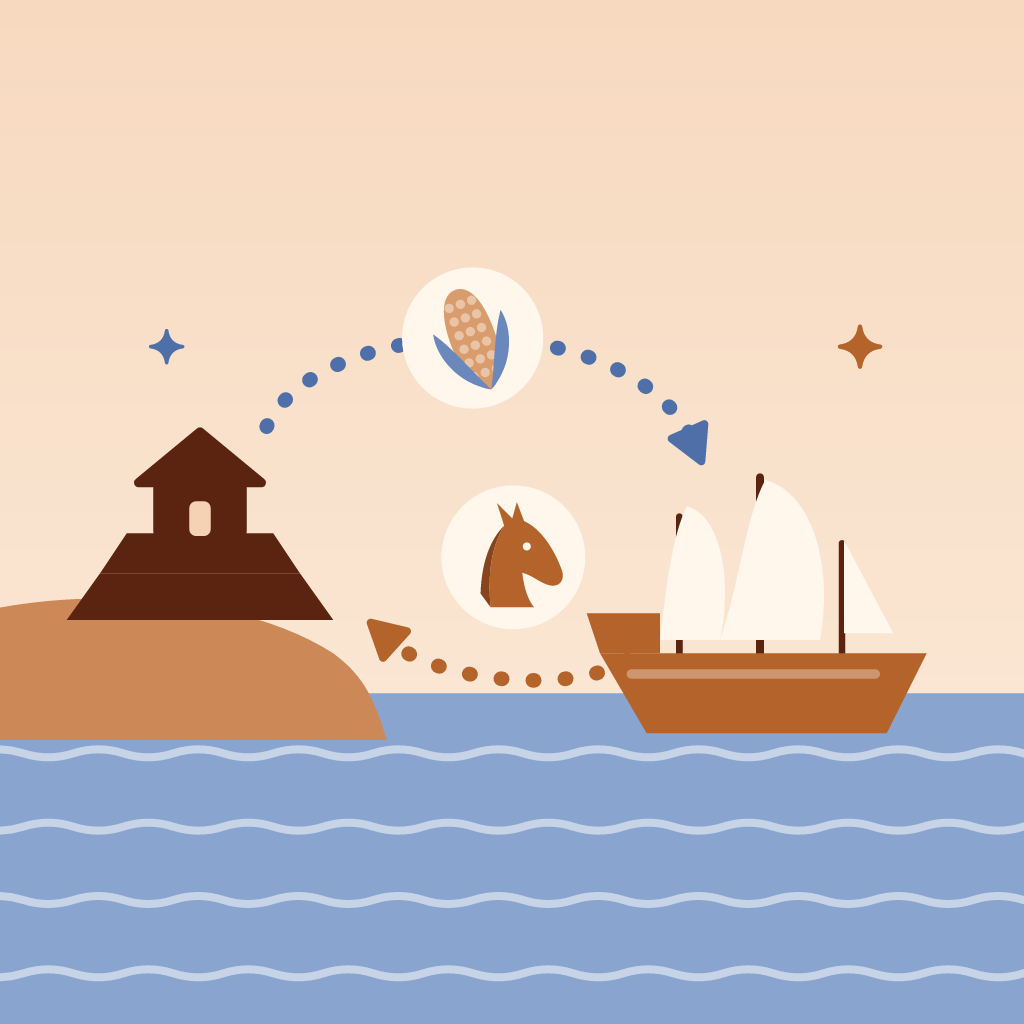
- Opens the survey by dismantling its most load-bearing false premise — the empty continent — with evidence rather than assertion, so every later claim about contact rests on knowing what was actually here.
- Establishes the exchange as two-way traffic before the learner meets any colonial system, so the demographic catastrophe reads as mechanism rather than backdrop.
- Cold mid-unit check on the two atoms just taught, placed before the empires lesson so a shaky continent-or-exchange foundation surfaces while it is still cheap to repair.Challenge
- Converts four colonization modes from names into a classification the learner can apply to an unseen scene, which is the unit's transferable skill and the one the gate measures.
- Terminal gate: samples all three unit concepts cold to establish that the causal frame — who was here, what crossed, who came to take it — holds before the arc to 1815 builds on it.Unit review
Unit 2
The Road to Revolution
2 lessons
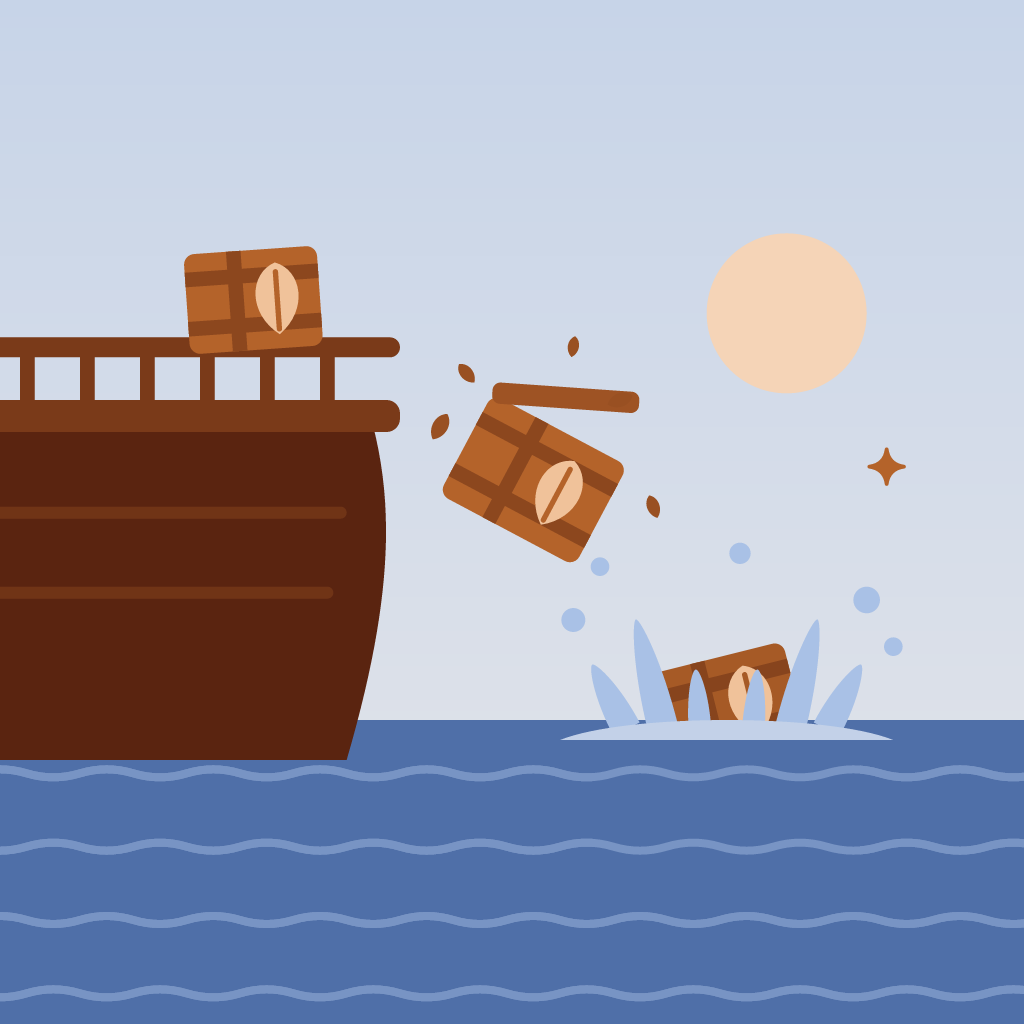
- Places the fiscal cause of the imperial crisis before its political rhetoric, so 'no taxation without representation' arrives as a response to a debt the learner has already reckoned with.
- Checkpoint crisisChallenge
Explore more roadmaps
Economics
A working understanding of how economies actually behave — how scarcity drives choice, how markets allocate resources (and fail to), how money and policy steer the macroeconomy, and how trade, behavior, and institutions shape long-run prosperity. The trunk gives you the throughline a literate citizen needs; clusters dive into elasticity, market failures, consumer/producer theory, monetary and fiscal policy, trade policy, behavioral finance, and economic history.
Mathematics
A working understanding of mathematics — the universal language scientists, engineers, and quants use to describe the world. The trunk gives you the throughline from how mathematicians think to how math models reality; clusters dive into proof, trig, calculus mechanics, advanced linear algebra, number theory and cryptography, probability, stochastic processes, and the foundational limits of math itself.
Probability & Statistics
A working understanding of probability and statistics — how to reason under uncertainty, turn data into claims, and recognize when those claims are honest. The trunk gives you the core vocabulary and the inference pipeline; clusters dive into Bayesian reasoning, frequentist theory, regression, stochastic processes, and experimental design.
Law
Legal literacy — how law actually works. The trunk gives you the operating system: where law comes from, how courts and precedent work, contracts, torts, property, criminal vs civil, and constitutional structure. Clusters dive into reading cases, contract mechanics, IP, your rights with police, and the startup legal toolkit.
Natural Science
A working understanding of the natural world — what science is, how matter and energy behave, how life persists and changes, and how Earth and the cosmos fit together. The trunk gives you a single coherent throughline across physics, chemistry, biology, and earth/space science; clusters dive into experimental design, mechanics, thermodynamics, electromagnetism, modern physics, genetics, ecology, and climate.
Psychology
A working understanding of psychology — what the science actually claims about how minds, brains, and behavior fit together. The trunk gives you the orientation a literate professional needs (how psychology knows what it knows, the brain behind behavior, learning, memory, decision-making, emotion, personality, social influence, development, pathology, and what therapy does); clusters dive into research methods, perception, cognition mechanics, social influence tactics, the field guide of disorders, applied behavioral science, and the psychology of everyday life.
Frequently asked questions
What does the American History roadmap cover?
2 units: First Peoples & Contact and The Road to Revolution.
Who is the American History roadmap for?
Anyone who took American history in school, kept the dates, and lost the story — and anyone who never got the story at all.
How do I start the American History roadmap?
Get the Mochivia app on the App Store and open this roadmap there.
Start American History
Scan on iPhone